-
Coding from my phone: a remote agentic setup
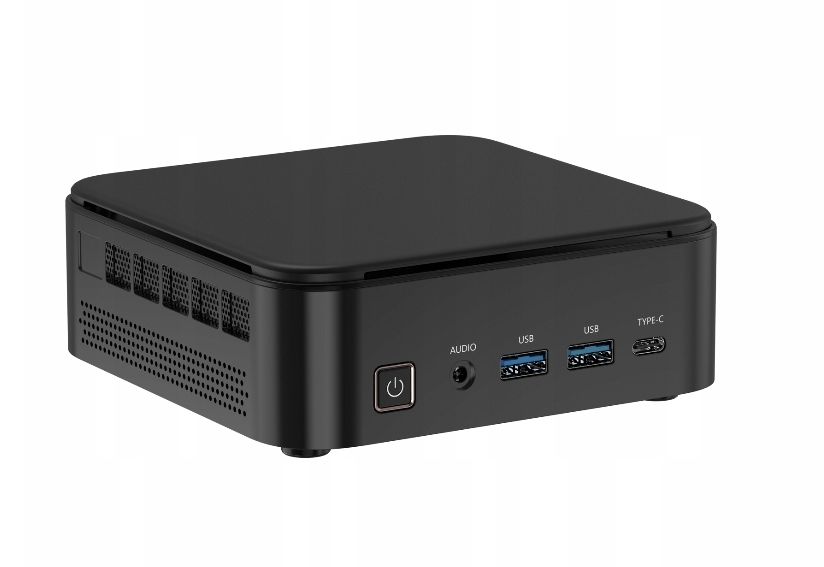
A year ago, on my laptop, I started to use the newly introduced — and still very imperfect — agent mode of GitHub Copilot to push forward my private project, the Retro Build Tool (RBT). The project had stagnated for a long time, and it was AI that finally brought it back to life. Today I use just my Android phone and Claude Code with remote control, which talks to a mini PC that runs around the clock at my house. When I write it down like that, it sounds like a decade of progress, but it has been just twelve months. A typical ‘coding session’ now looks like this: I pull the phone out of my pocket, I read...
-
Why don't I feel emotional about most of the code I write today?

A few days ago, my colleague Adam Witkowski published an interesting article titled ‘Digital Orphans’. In it, he compares two approaches to authoring code: The ‘classic’ approach, where code is crafted by hand, and the ‘vibe coding’ approach, where a human simply instructs an AI agent to generate code via natural language prompts and usually does not even look ‘inside’. Adam uses the beautiful metaphor of the parent-child relationship, which is applicable to the relationship between a programmer and their code. This relationship is certainly broken when we ‘instruct’ AI to write and deploy something that works. AI-generated applications become ‘digital orphans’, meaning nobody feels truly responsible for them. This leads to nasty things such as security issues and legacy...
-
How to organise and share your prompts in Agentic AI

Last time, I demonstrated how to use an AI agent for complex coding tasks. I opted for GitHub Copilot Agent Mode, but I could also have used Windsurf’s Cascade, Claude Code, or any other mature Agentic Coding tool. I tried to follow the approach outlined by Andrej Karpathy, who refers to it as Vibe Coding. Initially sceptical, I used a special prompting technique called ‘Plan and Execute’, which I had learnt about elsewhere (refer this source to learn more about “Plan and Execute” agent architecture), to try to control what the AI agent was doing to some extent. As a result, I vastly improved the agent’s efficiency and accuracy by creating a detailed plan and letting the agent execute it...
-
The Rise of Vibe Coding

With Vibe Coding it’s the same as with Agile: a reasonable idea gets ruined by misunderstanding, and this gets worse as the hype continues. This may happen if an idea is applied blindly, or even forcibly, and the result is far from what was anticipated. Losses instead of profits, and so on. Is it still not too late? First, let’s try to understand what Vibe Coding really is. We can find an informal definition on Wikipedia. By Vibe Coding, we mean a completely different approach to coding: a chatbot-based approach rather than an assistant-based one. The developer no longer works with the code directly, but rather develops via a series of prompts, letting the GenAI agent provide the implementation. The...
-
Significance of Architecture

When interviewing new candidates for the software architect position, I like to start with a few awkward questions, such as “What is architecture?”, “Who is an architect?” and “What do you do?”, before waiting for the ensuing moment of disbelief and long silence. Maybe some of them will try to beat the system by using these two rectangles and a barrel. Yes, I was there too. There are perhaps two reasonably correct answers to these questions. By “correct”, I mean “simple”, because a simple question deserves a simple answer. The first is that the architect is the most senior person on the team and knows about the things and how to avoid the traps. It’s just common sense. However, this...
-
When does AI take my job?

May was the second anniversary of my personal journey with AI, or generative AI to be precise. A few weeks ago before that moment, we had a quick chat on Zoom with some guys from all over the world, from Switzerland to New Zealand. So, the news was like, “You’ve heard that? One guy used something called ChatGPT and won a coding competition.” So, there was this chatbot, right? And it had this new tech that could understand natural English and respond to it. And get this – it could even code in almost any programming language. Wow! So as soon as I got there, I created an account and asked for a Basic v2 code doing something like bubble...
-
Power supply for bare ESP 8266 units
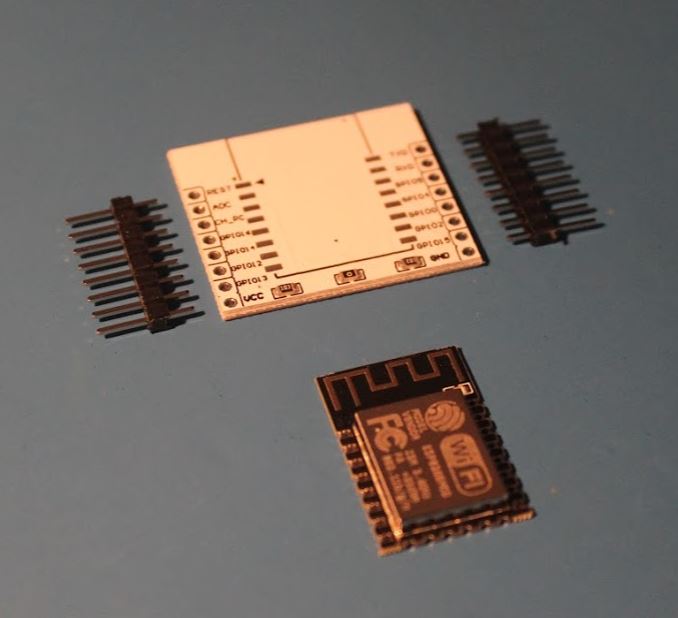
For battery powered ESP 8266 projects we would like to have a full control over electrical components that we use on board. This is because everything that draws power will also drain our battery, and this is something we want to avoid. The Wemos D1 Mini module seems to have the lowest memory consumption of them all, but we can still be better. In my battery powered projects I use ESP-12F modules and custom power circuit, that I would like to describe in this post. By the way, this approach will work with all other “bare” ESP modules like ESP-01, ESP-07, ESP-12S to mention just a few. The ESP-12F module is a member of so-called castellated module family, that is...
-
Gradle Retro Assembler plugin is released

The idea of a tool that can automatically download all dependencies and build my 6502 projects arose some time ago. In the meantime I started using 64spec for testing my assembly code. The library itself is great but requires a lot of manual operations once a great number of test files are created. I have noticed that Michał Taszycki, an author of 64spec, has already written a proof of concept tool, so that 64spec can be used from command line rather than by using user interface of Vice. I have looked into 64spec-cli and decided that it would be possible to reimplement it in Java. The result of my work has actually exceeded my expectations: it’s a fully functional Gradle...